A practical guide to bedding
Choosing a Duvet Cover: A Guide to Weave, Fit, and Closures
A duvet cover is part textile, part piece of household engineering. It should feel right against the skin, fit the insert without turning it into a lumpy parcel, and survive the recurring expedition to the washing machine. Fabric, dimensions, and closures all matter—and a label that says “queen” or “king” is only the beginning.
There are objects in a bedroom that announce themselves, and objects that work quietly in the background. A duvet cover belongs to the second group. In the morning, it may be folded down in a half-conscious gesture; at night, it is the layer one notices most directly, because it is the layer touching the body. Its design has to reconcile competing ambitions: a smooth fit, comfortable hand, sensible laundering, and enough practical resilience to be pulled on and off repeatedly without becoming a household ordeal.
The question is not simply which cover looks best on a neatly made bed. It is how the fabric behaves over hours of sleep, how the cover sits around the insert, and whether its fastening system makes changing the bed straightforward. These details matter whether you are considering a familiar cotton percale, a silky sateen, or linen with its characteristic texture. They also matter when comparing brands, including Sferra: the name on a label can be a useful starting point, but the specifications and care instructions are what tell you how a particular cover may work at home.
Begin with the insert, not the size label
“Queen” is a convenient category, not a guarantee of identical measurements. Duvet inserts sold under the same size name may differ in width, length, loft, and construction. Covers do, too. The result of a mismatch is familiar: an insert that migrates into a corner, a cover that looks overstuffed, or an expanse of fabric that gathers and twists instead of lying evenly across the bed.
Before buying, check the dimensions printed on the insert’s label or product details. Measure it yourself if the label is missing or if it has changed shape after years of use. Then compare those measurements with the cover’s stated finished dimensions. The closer the match, the less room there is for the insert to drift. A small difference may be acceptable, especially if the insert is lofty and the cover is intended to have a relaxed fit, but substantial extra space can invite bunching.
It is tempting to assume a larger cover will be more forgiving. Sometimes it is; sometimes it is simply larger. If the cover is much wider or longer than the insert, fabric can pool around the edges and make the bed look slack. If it is too small, the insert may be compressed, its loft reduced, and its corners difficult to reach. Neither result is improved by the comforting certainty of a size name. Dimensions are more useful than labels.
Think about the insert’s fill as well as its measurements. A lofty down or down-alternative comforter occupies more space than a flatter insert of the same length and width. The cover’s listed dimensions describe its surface, but not necessarily how roomy it will feel around a particularly plump insert. When in doubt, compare the cover and insert specifications and look for guidance from the maker. A well-matched set should allow the insert to spread naturally while remaining contained at the corners.
Measure the bed, then consider the look
The duvet itself need not stop at the exact edge of the mattress. Some sleepers prefer a generous drop that covers the sides; others want a tidier outline, particularly when the bed is close to the floor or surrounded by narrow bedside tables. Mattress depth, bed-frame height, and the number of people sharing the bed all influence the desired drape. A cover may fit its insert perfectly and still look too short on a tall mattress, because the insert was chosen for the bed’s nominal size rather than its overall proportions.
For a useful check, note the mattress width and length, then estimate how much fabric you want hanging on each side. Add the desired side drop to the mattress dimensions and compare that figure with the duvet insert’s measurements. This is not a prescription for a particular silhouette. It is a way to avoid asking the cover to do something its insert cannot do. If the duvet is meant to hang near the floor, the insert must be large enough to create that effect.
There is also the matter of shared sleep. Two people who pull the covers in opposite directions may appreciate extra width more than a solo sleeper would. A larger insert can help, but it should still be compatible with the cover. Buying a generously sized cover for a smaller insert does not create more duvet; it creates more uncovered fabric. The distinction is less dramatic in a product description than it is at two in the morning.
Fabric sets the first impression
The fabric determines much of a cover’s character: whether it feels crisp or smooth, light or substantial, cool or softly warm. Fiber content is important, but it is not the whole story. Weave, yarn, fabric weight, finishing, and laundering all shape the hand. Two covers made from cotton, for example, may feel quite different if one is percale and the other sateen.
Cotton percale is commonly woven in a simple, balanced construction that gives the cloth a matte appearance and a crisp, dry feel. Many people like its clean, airy character. It can soften through washing while retaining a more structured surface than some other cotton weaves. Sateen, by contrast, uses a weave structure that places more yarns on the surface, often producing a smoother hand and a gentle sheen. That finish can feel supple, but it may be warmer or more prone to showing wear than a plain, matte fabric, depending on its construction and care.
Linen is made from flax fibers and is often chosen for its textured surface, relaxed drape, and breathable feel. It tends to crease; the crease is not a malfunction, though it may be unwelcome to anyone who wants a sharply pressed bed. Linen can soften with use and washing, but the way it feels initially depends on the yarn, weave, and finishing. “Linen” alone does not tell you whether the cloth will be airy and light or relatively weighty. A stated fabric weight, when available, helps make comparisons more concrete.
Blends can alter the balance. A cotton-linen or linen-synthetic blend may have a different feel, drape, or laundering behavior from a single-fiber fabric. The label should identify the fiber content clearly. If a product description leans heavily on words such as “natural,” “cool,” or “soft” but is vague about composition, construction, and care, those adjectives are not a substitute for specifications.
Weave and weight: what the numbers can—and cannot—tell you
Weave describes how yarns cross one another. It affects the surface, durability, drape, and sometimes the way a fabric handles warmth and moisture. It is useful to know whether a cover is percale, sateen, plain-weave linen, or another construction. Thread count, meanwhile, measures the number of threads in a defined area of fabric, but it is not an all-purpose quality score. It does not describe fiber quality, yarn size, finishing, or the competence of the construction.
A very high thread count may sound conclusive, but it is only one data point—and sometimes a confusing one, particularly when multi-ply yarns are counted in ways that inflate the figure. For choosing a duvet cover, feel and function are better considered through a group of details: fiber, weave, weight, finish, and care requirements. A straightforward description of those elements offers more than a single impressive number.
Climate and personal preference matter as much as the label. A warm sleeper may prefer a lighter, more breathable-feeling fabric and a less insulating insert. Someone in a colder room may welcome a denser cloth. Still, a cover cannot control bedroom temperature on its own. Comfort depends on the entire bedding arrangement, the room, and the sleeper. Claims of universal temperature regulation should be treated as broad guidance, not a promise that any one fabric will suit everyone in every season.
Closures: small hardware, recurring consequences
The opening of a duvet cover is where domestic ideals meet the actual mechanics of laundry. The cover has to stay closed while the insert shifts, yet open widely enough to make removal and replacement manageable. Common options include buttons, ties, and snaps. Each has a different balance of security, speed, and maintenance.
Buttons are familiar and can be repaired or replaced if one comes loose. Their spacing and size matter: a long opening with too few buttons may leave gaps, while tiny buttons can be fiddly during a change. Look at the placket as well as the fasteners. A fabric overlap can help conceal the opening and keep the edge looking orderly, although its design varies. Buttons may catch on other laundry if left fastened or exposed, so follow the care guidance and consider how the opening is finished.
Ties are often placed inside the cover, at the corners, to attach the insert. They can help keep the duvet from sliding away from its cover, particularly when the insert has corresponding loops. They are not a replacement for the outer closure: many covers use both corner ties and buttons, snaps, or another fastening at the opening. Ties work best when they are securely sewn and long enough to fasten without strain. If the insert has no loops, a tie may still be wrapped around a corner, but the arrangement is less secure and can be awkward to manage.
Snaps can make opening and closing quick, though their strength and placement determine how secure they feel in use. They may be less convenient to repair than a standard button and buttonhole if a component fails. As with buttons, inspect whether the closure lies flat and whether the edges are reinforced. The most convenient system is not necessarily the one with the fewest seconds of fastening; it is the one that remains reliable after repeated changes and washes.
Whatever the closure, corner ties are worth checking if the insert tends to migrate. Some covers include four; others may provide more attachment points, and some include none. More anchors can distribute movement more evenly, but only if the insert can be attached to them. When product details are silent about internal ties, do not assume they are included.
Construction details reward a closer look
A duvet cover is a large piece of fabric with several seams under regular strain. Inspect the finish at the opening, the corners, and the seams. Neat stitching and reinforced stress points can contribute to durability, though a description alone cannot guarantee how a textile will age. Embroidery, flanges, piping, and decorative borders can add visual definition; they can also affect how the cover feels, folds, or fits beneath another layer.
For a spare, uncomplicated bed, a clean hem and a discreet closure may be preferable. For a more tailored appearance, details such as a flange or hemstitch can give the edge a deliberate frame. These are aesthetic choices, not measures of comfort or longevity. Consider whether trim will be easy to launder and whether it might feel noticeable under the hand or face. A cover is allowed to be beautiful, but it still has to go through the wash.
Care instructions are part of the purchase
Before choosing a cover, read its care label or the maker’s full care guidance. Check water temperature, cycle recommendations, drying method, ironing instructions, and warnings about bleach or fabric softener. A machine-washable cover may still require a gentle cycle, low heat, or a large-capacity machine. A bulky duvet cover packed tightly into a small washer may not rinse or dry evenly.
Fabric care is not a contest in which the most elaborate routine wins. It is a matter of following the instructions for the textile in front of you. High heat can stress fibers and seams; overdrying can leave some fabrics harsh or more deeply creased. Bleach and strong detergents can affect color or weaken fibers, depending on the material. If a cover has decorative work or a particularly delicate finish, its care needs may differ from those of the sheets used beneath it.
Practicality includes drying time and storage. A fabric that is pleasant to touch but slow to dry may require planning if the household has one cover in rotation. A crisp finish may invite ironing; a relaxed linen surface may make that unnecessary. Neither is inherently better. The right choice is the one whose care fits the habits and equipment of the household, rather than an idealized version of laundry day.
Comparing brands, including Sferra
When comparing duvet covers from Sferra or any other maker, begin with the same checklist: finished dimensions, fiber content, weave, fabric weight if provided, closure type, corner ties, country of manufacture where stated, and care. A familiar brand may offer several fabrics with different characteristics, so the brand name alone cannot tell you which cover suits your bed. Compare the specific product descriptions rather than relying on a general impression of a company’s style.
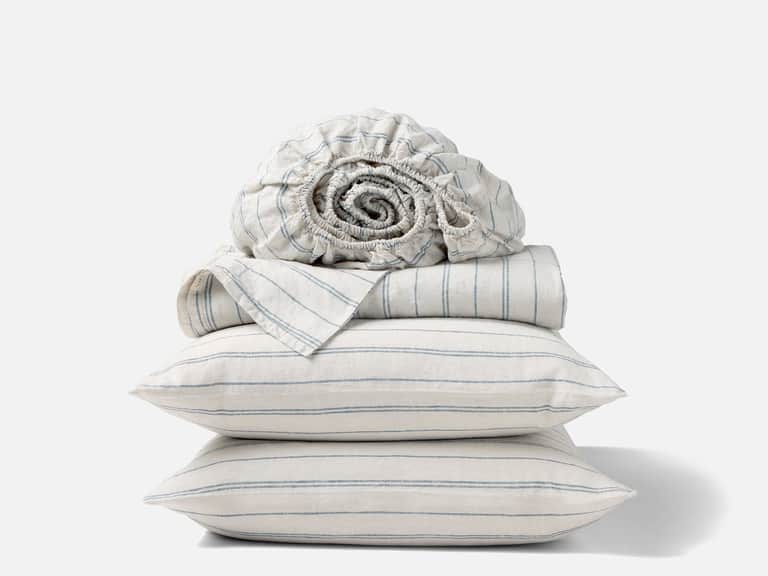
Be attentive to what is included. A listing may describe a cover only, while the photograph or styling suggests a complete bedding ensemble. The insert, shams, and sheets may be sold separately. Confirm the exact dimensions and contents before ordering, and check the return policy in case the hand or fit differs from what you expected. This is especially useful when the purchase involves a fabric you have not felt in person.
Carefully written specifications are a sign of useful product communication, not a guarantee of perfection. If essential information is missing, asking the retailer or manufacturer is more dependable than guessing. In the end, good comparison is less about discovering a universal best cover than about finding a sound match between insert, sleeper, room, and routine.
A concise checklist before you buy
- Measure the insert. Compare its actual width and length with the cover’s finished dimensions.
- Consider loft and drape. A lofty insert needs enough room, while a cover that is much too large may bunch.
- Choose by fabric and weave. Compare fiber content, percale or sateen construction, linen texture, and stated weight.
- Check the closure. Look for buttons, ties, or snaps, and confirm whether corner ties are included.
- Read the care instructions. Confirm that washing and drying requirements work for your household.
- Verify what the listing includes. A duvet cover is not necessarily sold with an insert, sheets, or pillow shams.
The comfort of getting the details right
It is easy to treat the duvet cover as a finishing touch, something chosen after the more consequential decisions have been made. But its details are not merely decorative. Dimensions determine whether the insert stays evenly distributed. Weave and fiber influence the feel against the body. Closures shape the small but repeated task of changing the bed. Care instructions determine whether the fabric can be maintained without unreasonable effort.
There is no single fabric or fastening system that wins in every bedroom. A crisp cotton percale, a smoother sateen, and a relaxed linen may each be the right answer for a different sleeper. The practical method is steady and unsentimental: measure first, read the construction details, and imagine the cover not only on a made bed but in the washer, on the clothesline, and in your hands on an ordinary evening. A good choice is not a promise of perfect sleep. It is a thoughtfully made layer that fits, feels comfortable, and asks no more of the household than it needs to.