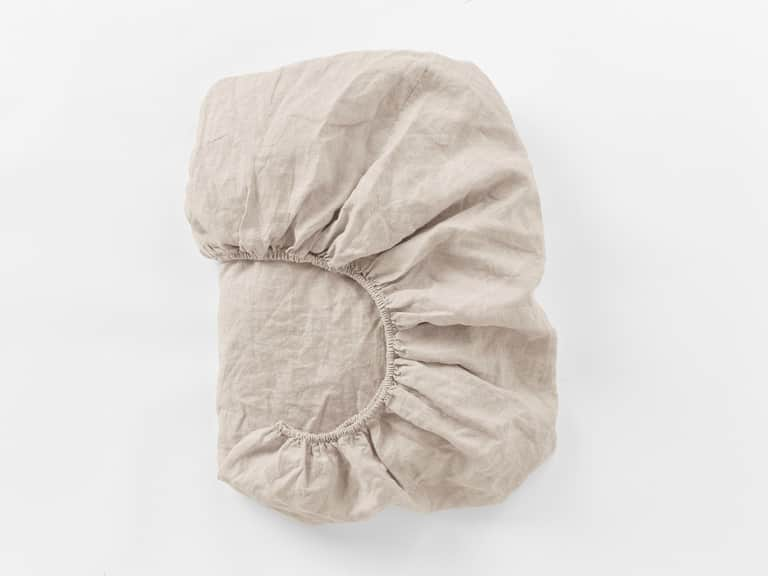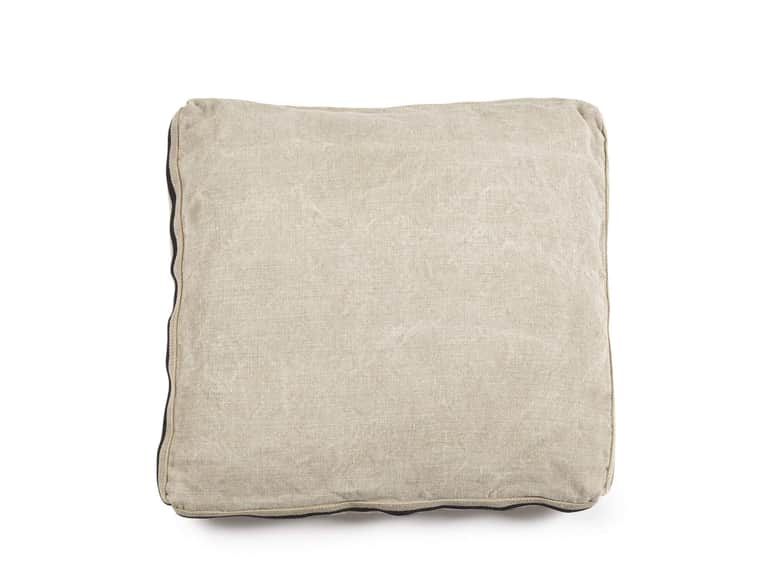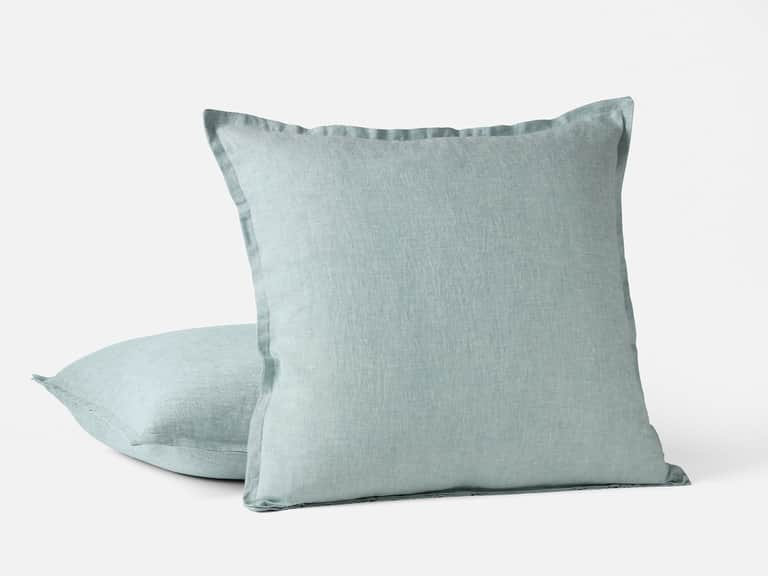
Organic Relaxed Linen Decorative Pillow Cover
Soft, breathable linen pillow cover that relaxes with use, keeps your sleep space cohesive and eco-friendly, and cleans easily in cold machine wash. Insert sold separately.
A practical, editor's tour through linen fibers, their science, and how brands translate these properties into bedding you can live with. From flax to finish, from breathability to longevity, this piece unpacks what makes linen bedding different and why that difference matters for comfort, care, and sustainability.
Linen has long carried the aura of hospitality and durability. It is the fabric of old inns, of summer households, of linen closets that smell faintly of sun and wind. In modern bedrooms, its presence is less about show and more about a lived-in ease: a surface that feels cool to the touch, that breathes as you sleep, and that grows softer with every wash. The fiber at the heart of linen is flax, a plant that lends linen its distinctive strength, moisture management, and ecological footprint.
When you shop for linen bedding, you are not simply choosing a textile; you are selecting a performance system. Linen’s crisscrossed fiber structure creates spaces for air to circulate and moisture to wick away from the body. This is why linen sheets and pillowcases often feel crisper and cooler than cotton, especially in warm weather or humid climates. The slow-softening journey linen takes—with each wash, wear, and wrinkle—contributes to a tactile relationship with your sheets that is rarely matched by more uniform fabrics.
Brand ecosystems matter as well. Companies like Naturepedic, Coyuchi, and Downtown Company curate linen to maximize texture, finish, and usability. Naturepedic’s organic linen lines emphasize GOTS-certified organic flax and stone-washed textures; Coyuchi’s Organic Relaxed Linen line leans into a casual, lived-in drape; and Downtown Company highlights linen’s quiet luxury through refined finishing and garment-washed softness. Each brand interprets linen slightly differently, but all share a commitment to the fiber’s natural properties and to sustainable production paths.
The core of linen’s appeal lies in its mechanism for climate control. Flax fibers are hollow and naturally breathable. Their porous structure creates channels for air to flow, which helps cool the surface of the fabric on warm nights and prevent overheating. Linen’s moisture management is another defining feature: it can wick moisture away from the skin more efficiently than many cotton varieties, which translates into a feeling of dryness and crispness even in higher humidity environments.
Durability follows a similar logic. The fiber’s natural strength—strength that increases with moisture and use—gives linen bedding longevity that is hard to match in blends or synthetics. A well-made linen sheet may feel stiffer at first, only to relax into a supple, soft presence after a few washes. The texture—the characteristic slub and natural creases—becomes part of the fabric’s personality, not a defect to be ironed away. In a world of throwaway textiles, linen bedding has a reputation for aging gracefully, accruing character while preserving function.
Care considerations are essential for maintaining linen’s health over time. Linen responds well to gentle laundering: cool to warm water, a light tumble, and a minimal amount of agitation to avoid excessive wear. The plant-based finishes used by responsible brands aim to preserve the material’s natural feel while ensuring colorfastness and wash durability. The result is a bedding system that remains breathable, robust, and easy to refresh—season after season.
To illuminate linen’s enduring appeal, consider three individuals who, across eras, illuminate different facets of linen’s cultural and scientific significance.
Hypatia’s world was one of materials knowledge and inquiry. While not about linen specifically, her era exemplified a rigorous, empirical approach to understanding natural fibers and their properties. The idea that textiles might interact with body temperature, moisture, and comfort would have resonated with any scholar mapping the interplay between fabric structure and wearer experience. Linen’s long history as a practical, breathable fabric sits alongside Hypatia’s commitment to rational exploration—the two strands converging in the modern consumer’s expectation that textiles perform as promised in daily life.
Curie’s work on radioactivity was a cautionary tale about measuring and understanding materials under stress. In linen terms, durability and stability under repeated washing might be viewed as a parallel. Linen’s resilience—its ability to hold shape, resist pilling, and improve with wash cycles—echoes Curie’s insistence on robust, evidence-based science. The modern linen-fiber story—from flax growth to spinning and weaving—belongs to the same family of careful measurement, reproducibility, and long-term performance that Curie championed.
Hadid’s architecture was about contours, light, and the way spaces feel. Linen bedding has a parallel: its surface texture, its weight, and its breathability shape the room’s tactile and thermal atmosphere. Hadid’s approach to materiality—how a textile’s character informs a space—echoes in linens that balance structure (edge finishes, hems and seams) with softness (washed hand, relaxed drape). The design-driven lineage of linen bedding—where material choice informs mood and tempo of a room—is part of Hadid’s broader legacy of crafting spaces that feel inevitable and alive.
In the end, linen bedding is more than a material choice. It is a functional rapport with the body and environment—a texture that breathes with you, a surface that grows softer and more honest with time. The dialogue between flax and loom, stone wash and sun, the modern brands that curate and refine, and the countless sleepers who seek relief and ease at night—all of these strands weave into a fabric that remains deeply, almost insistently human.
If you enjoyed this exploration, consider these ideas for continued coverage on findlinens.com, aligned with Direction A: Linen Knowledge Encyclopedia:
Would you like a site map, a starter content plan (10–15 ideas with outlines), or an SEO and branding brief tailored to your goals? I can draft those to guide development and ensure a cohesive, searchable knowledge hub.
End of article. Images above are for product illustration; all fabric descriptions and attributes are based on real product data and brand messaging from Coyuchi, Naturepedic, and Downtown Company as referenced in the accompanying catalog. The featured product above demonstrates how a real-world linen item can embody the principles discussed: breathability, organic sourcing, and durable, relaxed finishes that improve with use.